
Apps are helping people build better oral habits by turning brushing, flossing and other daily routines into something measurable, timed and rewarded, rather than a task done on autopilot. Instead of relying on memory or guesswork, a person can see exactly how long they brushed, whether they covered every part of the mouth, how often they flossed over the past month, and how consistent they have been over time. This shift from vague intention to visible data is what makes digital tools genuinely useful for oral health, because most gum and tooth problems develop slowly, from habits repeated (or skipped) day after day rather than from a single missed session.
Key takeaways
- Habit-tracking apps make invisible routines visible, which helps people brush and floss more consistently over time.
- Built-in timers and sensors encourage the full recommended brushing duration rather than a rushed pass.
- Reminders and streaks address the biggest barrier to oral health: forgetting or losing motivation, not lack of knowledge.
- Progress data can be shared with a dental professional to support more personalised advice at check-ups.
- Apps work best as a support tool alongside, not instead of, professional guidance and regular check-ups.
Why do people struggle to keep up with oral hygiene routines?
Most people already know the basics of oral care, yet knowledge alone rarely translates into consistent behaviour. Life gets busy, mornings are rushed, and a two-minute brushing session is easy to shorten without noticing. Flossing is often skipped entirely because it takes a few extra seconds and delivers no immediate, visible reward. Over weeks and months, these small lapses accumulate, allowing plaque to build up in places a toothbrush cannot reach.
The gap between intention and action is a well-recognised pattern in behavioural science, not a personal failing. People tend to stick with habits that are easy, immediate and rewarding, and struggle with ones that are effortful with delayed benefits. Oral hygiene fits the second category perfectly, since the consequences of neglect, such as gum inflammation or early decay, often take months to become noticeable. This is precisely the gap that habit-tracking tools are designed to close.
What features do oral care apps typically offer?
Most oral care apps centre on a handful of core features: a brushing timer that runs for the recommended duration, a calendar or streak counter that logs each completed session, and gentle reminders that prompt a person at the same time each day. Many also divide the mouth into quadrants and prompt the user to spend equal time on each section, which helps prevent the common habit of favouring one side of the mouth over another.
More advanced versions pair with a connected electric toothbrush or a phone sensor to detect motion, pressure and coverage in real time, offering feedback such as a warning when brushing too hard or missing a section. Some apps extend beyond brushing to track flossing, mouth rinse use, or even hydration and sugar intake, building a broader picture of daily habits that influence oral health rather than focusing on brushing alone.
How does tracking actually change behaviour?
The simple act of recording a habit tends to increase how consistently it is performed, a phenomenon often described as the measurement effect. When brushing or flossing is logged daily, small gaps become obvious rather than easy to ignore, which creates a mild but effective sense of accountability. Streaks, in particular, tap into a natural reluctance to break a run of consecutive successful days, encouraging people to keep going even when motivation dips.
Visual progress also makes long-term improvement tangible in a way that memory cannot. Seeing a month of completed sessions, or a graph showing brushing duration gradually reaching the recommended two minutes, provides feedback that reinforces the behaviour. This differs from traditional advice, which tends to be delivered once at a check-up and then forgotten within days, because the app repeats the message consistently, in small doses, at the moment it is most relevant.
Can apps help with specific habits like flossing or reducing sugary snacking?
Flossing is one of the most commonly neglected oral hygiene habits, largely because it is easy to forget and delivers no immediate sensation of cleanliness. Apps address this by scheduling a separate reminder for flossing, distinct from the brushing prompt, and by logging it separately so gaps become visible rather than blending into an overall sense of “I look after my teeth.” Some apps also include short instructional guidance on technique, since incorrect flossing can be as ineffective as skipping it altogether.
Diet-related habits, particularly frequent sugary or acidic snacking, are harder to track directly but some apps include a simple food or drink log alongside oral hygiene records. Seeing snacking frequency alongside brushing habits can highlight patterns, such as grazing throughout the day, that increase the time teeth spend exposed to acid. While these logs are rarely as detailed as a dedicated nutrition app, even a basic overview can prompt useful awareness of habits that affect enamel over time.
Are reminders and streaks effective for children and teenagers?
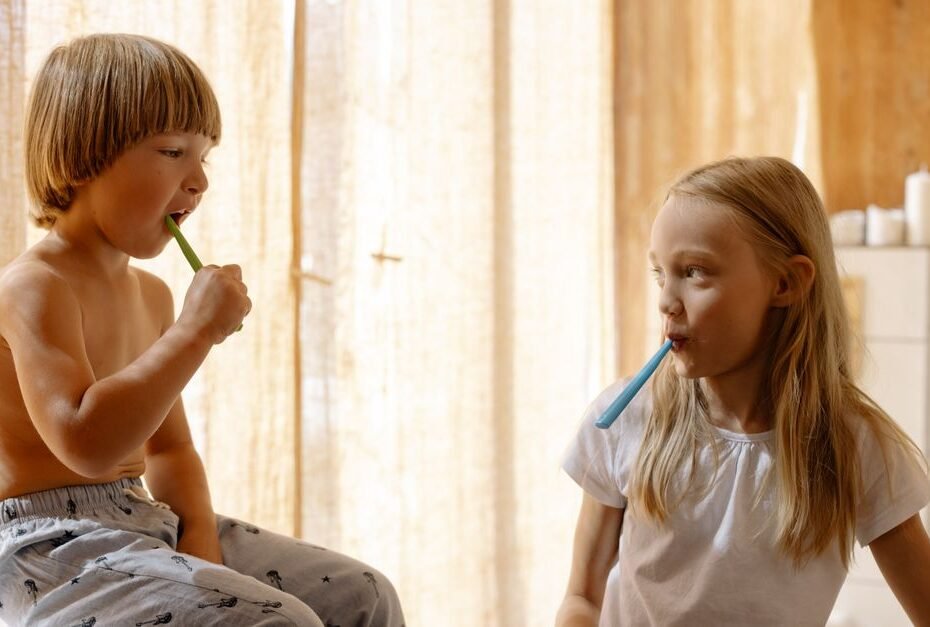
Children and teenagers often respond particularly well to gamified elements such as streaks, badges and progress bars, since these mirror reward structures already familiar from games and school-based incentive systems. A visual timer that changes colour as brushing progresses, paired with a cartoon character or points system, can turn a chore into something closer to a small daily challenge, which is especially useful for younger children still building the habit.
For teenagers, the appeal tends to shift toward autonomy and self-monitoring rather than character-based rewards. Being able to see their own consistency data, set personal goals, and track improvement over weeks can feel more motivating than being reminded by a parent. Family-oriented apps sometimes allow a parent to view a shared dashboard without directly supervising each session, which supports independence while still offering a general sense of oversight during the years habits are still forming.
What role do connected toothbrushes and sensors play?
Smart toothbrushes that pair with an app add a layer of objective measurement that self-reporting cannot match. Built-in sensors can detect brushing pressure, motion patterns and duration, then relay this data to the app in real time, flagging issues such as pressing too hard, which can contribute to gum recession, or consistently under-brushing certain areas of the mouth. This turns brushing from a habit judged purely by feel into one supported by concrete feedback.
Even without a connected toothbrush, a phone’s built-in sensors and camera can sometimes approximate similar tracking, using motion detection or short video prompts to estimate coverage and duration. While these methods are generally less precise than a dedicated sensor-equipped brush, they still provide considerably more structure than an unaided routine, and for many people the improvement in consistency matters more than pinpoint technical accuracy.
How can data from these apps support conversations with a dental professional?
One of the more practical benefits of habit-tracking apps is the record they create over time, which can be reviewed during a routine dental visit. Rather than relying on a patient’s general impression of “I brush most days,” a dentist or hygienist can look at objective data on frequency, duration and consistency, allowing advice to be tailored to actual patterns rather than assumptions. This can be particularly useful when investigating early signs of gum inflammation or recurring plaque build-up.
This kind of data sharing also shifts the check-up conversation from a one-way lecture to a more collaborative discussion. If an app shows that flossing consistently drops off midweek, or that one side of the mouth is regularly under-brushed, a professional can offer specific, targeted suggestions rather than generic reminders. Over several visits, this can help track whether adjustments to technique or routine are translating into measurable improvement.
What are the limitations of relying on an app for oral health?
Despite their usefulness, tracking apps have clear limits. They can confirm that brushing happened for the recommended duration, but they cannot fully verify technique, meaning a person could brush for two minutes with a poor angle or excessive pressure and still receive a positive log entry. Motion-based sensors help narrow this gap, but no consumer app can replace a professional assessment of gum health, enamel condition or hidden decay between teeth.
There is also a risk of over-reliance, where completing the app’s checklist becomes the goal itself rather than genuine oral health. A perfect streak does not guarantee ideal outcomes if underlying technique is flawed or if regular professional check-ups and cleanings are skipped. Apps work best when treated as a supporting habit-formation tool that sits alongside, rather than replaces, periodic professional guidance and hands-on assessment of the mouth.
How should someone choose an oral care app that actually helps?
With a wide range of oral care apps available, the most useful ones tend to share a few common traits: a straightforward timer, clear and non-intrusive reminders, and a simple history view that is easy to check at a glance. Overly complex apps with excessive gamification, intrusive notifications or unnecessary social features can become a distraction rather than a support, causing some people to abandon them altogether within a few weeks.
It is also worth considering privacy and data handling, since some apps collect fairly detailed personal health information. Choosing an app with clear, understandable privacy practices, and only sharing data with a dental professional when it is genuinely useful to do so, keeps the focus on the practical benefit: building a consistent, well-informed oral hygiene routine that holds up over the long term, rather than accumulating data for its own sake.
Frequently Asked Questions
Do oral care apps actually improve brushing habits, or is the effect mostly short-term?
Evidence from behavioural research suggests that tracking and reminders do improve consistency, particularly in the first few months, by making a routine visible and creating a mild sense of accountability. The effect can fade if reminders become repetitive or ignored, so apps tend to work best when paired with genuine motivation to improve, rather than being used as the sole driver of change.
Can a phone app replace a smart connected toothbrush for tracking brushing quality?
A standard phone app can track timing and frequency reliably, but it generally cannot measure pressure or precise coverage the way a sensor-equipped toothbrush can. For basic consistency tracking, a phone app is sufficient, but anyone specifically concerned about brushing pressure or technique may benefit more from a connected brush with built-in sensors.
Are oral hygiene tracking apps suitable for young children?
Many apps are designed with younger users in mind, using colourful timers, characters and simple reward systems to make brushing feel engaging rather than routine. For very young children, an adult should still supervise brushing directly, using the app as a motivational aid rather than a substitute for hands-on guidance and checking that brushing is thorough.
Is it safe to share oral hygiene app data with a dental professional?
Sharing consistency data, such as brushing frequency and duration, is generally safe and can help a dental professional give more tailored advice. It is sensible to check an app’s privacy settings beforehand and only share data through secure, intended channels, rather than sending screenshots or exports through unsecured methods.
Why do people stop using oral care apps after a short period?
Common reasons include notification fatigue, overly complicated interfaces, or a feeling that the app has become a chore in itself rather than a helpful support. Choosing a simple app with only the features that are genuinely useful, and adjusting reminder frequency to something realistic, tends to improve how long people stick with it.