
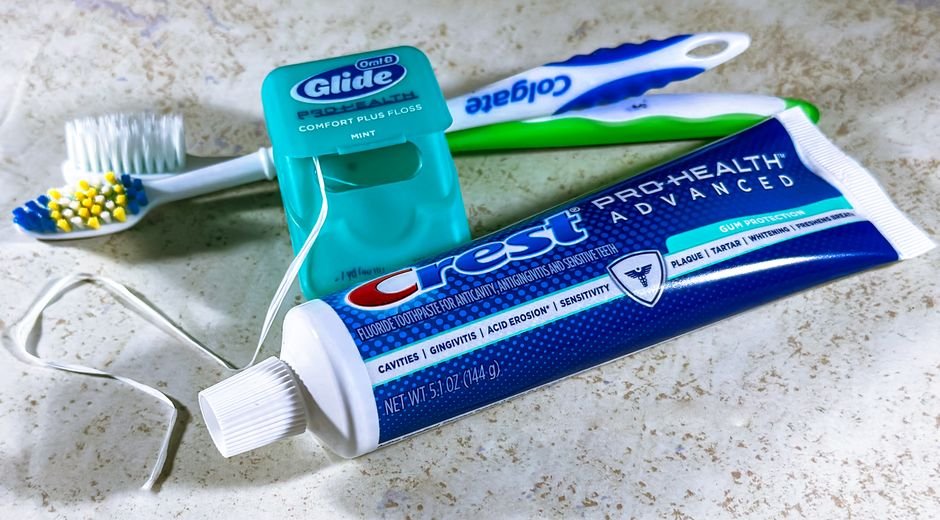
An oral care routine that actually lasts is one that fits around your existing schedule rather than demanding you reshape your entire day, which means starting with the few habits that matter most and anchoring them to things you already do, such as brushing right after your morning coffee or flossing while watching the news. The goal is consistency over perfection, since a simple routine followed daily protects your teeth far more effectively than an elaborate one you abandon after a fortnight.
Key takeaways
- A sustainable routine is built around your actual schedule, not an idealised version of it.
- Anchoring new habits to existing ones makes them far easier to stick with long term.
- Brushing twice daily and flossing once remain the non-negotiable core of any routine.
- Simplifying your routine during busy periods beats abandoning it altogether.
- Small, consistent habits protect your teeth more than occasional, elaborate ones.
Why Do So Many Oral Care Routines Fail to Stick?
Most oral care routines fail not because people lack discipline, but because the routine itself was designed around an unrealistic version of daily life. A plan that assumes ten free minutes morning and night, uninterrupted by children, work, or general exhaustion, tends to collapse the moment life gets busy. When a routine requires too much time or too many separate products, it becomes one more task competing for attention rather than something that happens automatically.
The habits that last are the ones that require the least willpower to maintain. This usually means reducing the routine down to its essential components, brushing and flossing, and building those into moments that already exist in your day rather than carving out entirely new blocks of time. Once the basics are consistent, additional steps such as mouthwash or a tongue scraper can be layered in gradually, rather than all at once.
How Can You Anchor Brushing to an Existing Habit?
Habit formation research consistently shows that new behaviours stick best when attached to something you already do reliably. If you always make coffee first thing in the morning, keep your toothbrush somewhere you will see it while the kettle boils. If you always check your phone before bed, place your toothbrush next to your charger so the two actions naturally follow one another. This removes the need to remember a separate task and instead folds oral care into a sequence you are unlikely to skip.
The same logic applies to flossing, which is often the first habit to be dropped when time is tight. Rather than treating it as a separate evening chore, try flossing immediately after brushing, using the same standing position at the same sink. Over a few weeks, this sequence becomes automatic, and skipping it starts to feel more effortful than simply doing it.
What Should the Non-Negotiable Core of a Routine Include?
At a minimum, a sustainable routine includes brushing twice daily for around two minutes with a fluoride toothpaste, and flossing at least once a day to clean between teeth where a brush cannot reach. These two habits address the vast majority of preventable dental problems, including cavities and early gum disease, and form the foundation that everything else builds upon. If you can only maintain two habits reliably, these are the two worth protecting.
Everything beyond this core, such as mouthwash, interdental brushes, or a tongue scraper, is a valuable addition but not essential to basic oral health. Framing your routine this way takes the pressure off feeling like you need a lengthy, multi-step regimen every single day. On particularly hectic days, falling back to just the core habits is a reasonable compromise rather than a failure.
How Do You Adapt Your Routine During Busy or Disrupted Periods?
Travel, illness, new parenthood, and demanding work periods are exactly when routines are most likely to slip, yet these are also the times when consistency matters most. Rather than aiming for your ideal routine during a disrupted period, plan in advance for a simplified backup version, perhaps just brushing morning and night without the extra steps you might normally include. Having this backup version already decided removes the decision fatigue that often leads to skipping oral care altogether.
Packing a small travel kit that lives permanently in your bag or car also removes a common excuse for skipping brushing away from home. The aim during disrupted periods is not perfection but continuity, keeping the core habits alive even in a reduced form until your normal schedule returns and the fuller routine can resume.
Does the Order of Your Routine Actually Matter?
There is ongoing debate about whether to floss before or after brushing, but the honest answer is that consistency matters more than order. Flossing before brushing allows fluoride from the toothpaste to reach between teeth that have just been cleared of debris, which some dentists consider slightly more effective, but flossing after brushing is still far better than not flossing at all. Choose whichever order you are more likely to actually complete every day.
The same principle applies to mouthwash, which some people prefer to use immediately after brushing and others prefer at a separate time of day to avoid rinsing away the concentrated fluoride left behind by toothpaste. If you are including mouthwash in your routine, using it at a different time from brushing, such as after lunch, can offer a helpful mid-day boost without interfering with your morning or evening routine.
How Can Technology Help You Stay Consistent?
Simple tools can reinforce a routine without adding real complexity. A basic phone alarm or reminder can help establish a fixed brushing time until it becomes automatic, and some electric toothbrushes include built-in timers that ensure you brush for the full two minutes rather than rushing through it. These small nudges are particularly useful in the early weeks of building a new habit, before it becomes second nature.
Tracking apps, whether a simple habit tracker or a feature built into a smart toothbrush, can also provide a sense of momentum, showing a visual streak of consistent days that many people find motivating. The technology itself is not essential, but for those who respond well to visible progress, it can be a useful bridge between an intentional new habit and one that runs on autopilot.
How Should a Routine Change as Your Life Changes?
An oral care routine built at one stage of life may not fit a later one, and revisiting it periodically makes sense. A routine designed around a quiet single household will need adjusting once children, shift work, or new caregiving responsibilities enter the picture, and expecting the old version to hold without modification often leads to frustration and eventual neglect. Treating your routine as something you refine occasionally, rather than something you set once and never revisit, keeps it realistic.
Checking in with your dentist during regular checkups is a useful prompt for this kind of review, since they can flag early signs that your current routine is not quite keeping pace with your needs, whether that means recommending a different toothpaste, an additional tool, or simply reinforcing the basics that may have slipped during a busy season.
What Role Does Diet Play Alongside Your Daily Routine?
Brushing and flossing address plaque removal, but what and how often you eat and drink throughout the day also shapes your oral health considerably. Frequent snacking or sipping on sugary or acidic drinks throughout the day gives bacteria a near-constant supply of fuel, regardless of how well you brush at the two designated times. Building small dietary awareness into your daily rhythm, such as drinking water after a sugary drink or limiting snacking to set times, complements your brushing and flossing routine rather than replacing it.
This does not require an overhaul of your diet, simply an awareness that oral care is not confined to the few minutes spent at the sink each day. Small, realistic adjustments, paired with a consistent core routine, tend to produce better long-term results than an intense routine that ignores what happens in between brushing sessions.
Frequently Asked Questions
How long should I spend brushing my teeth each time?
Around two minutes twice a day is the generally recommended standard, giving enough time to clean all surfaces thoroughly without becoming a burdensome task.
Is it better to floss before or after brushing?
Either order works well as long as it happens daily. Choose whichever sequence you are most likely to stick with consistently over time.
What should I do if I miss my routine on a particularly busy day?
Fall back to the core habits of brushing morning and night rather than skipping oral care entirely, and resume your fuller routine once things settle down.
Do I really need mouthwash as part of my daily routine?
Mouthwash is a helpful addition but not essential. Brushing and flossing remain the most important habits for maintaining oral health.
How often should my routine be reviewed or adjusted?
Revisit it whenever your circumstances change significantly, and use regular dental checkups as a natural prompt to reassess whether it still fits your needs.