


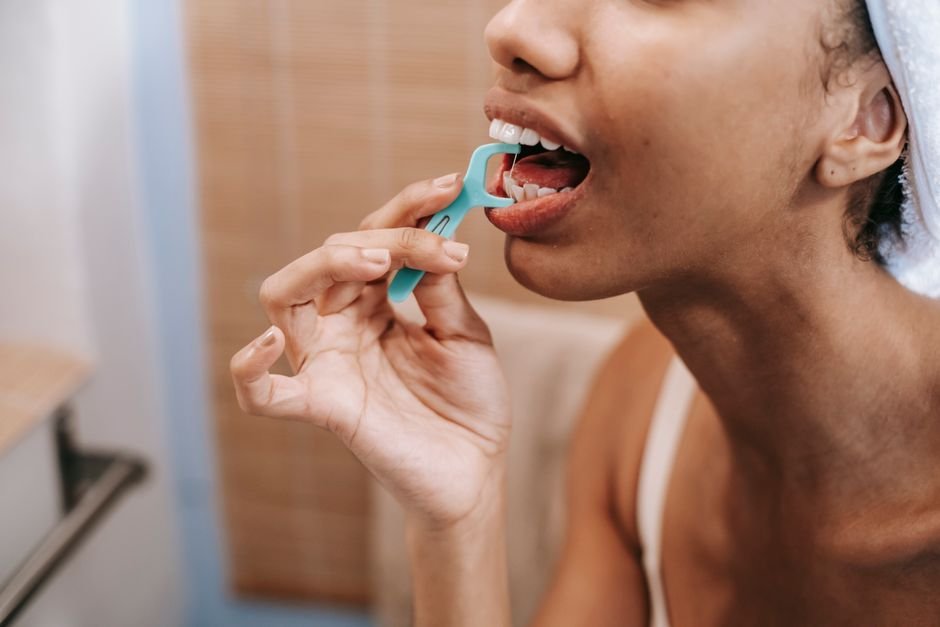
Flossing every day matters because a toothbrush cannot reach the surfaces between your teeth, and those hidden gaps are exactly where decay and gum disease most often begin. Cleaning between the teeth removes the soft plaque film before it hardens and before the bacteria in it can inflame the gums or erode enamel. A minute of flossing is a small daily action that heads off cavities in awkward locations, bleeding gums, bad breath, and the more involved and costly treatment that follows when these problems are left to grow.
Key takeaways
- Brushing cleans only about three of the five surfaces of each tooth; flossing covers the rest.
- Plaque left between teeth hardens into tartar within days and can then only be removed professionally.
- Most gum disease and many cavities start in the spaces a brush cannot reach.
- Daily is far more effective than occasional; the gaps refill with plaque every day.
- Interdental brushes or a water flosser are good alternatives if string floss is difficult.
Why Can’t Brushing Do the Whole Job?
Each tooth has five surfaces: the front, the back, the biting surface, and the two sides that touch neighbouring teeth. A toothbrush does a good job on the first three, but its bristles cannot fit into the tight contact points where teeth meet. That leaves roughly two surfaces of every tooth largely untouched by brushing alone, and in a full adult mouth that adds up to a significant amount of uncleaned surface.
Those between-teeth areas are also the most sheltered, so plaque there is rarely disturbed by chewing, the tongue, or saliva flow. Undisturbed plaque is where bacteria multiply most freely. This is why two people can both brush diligently twice a day, yet the one who also cleans between the teeth has far fewer problems in those specific spots over the years.
What Happens to Plaque That Is Left Between Teeth?
Plaque is a soft, sticky layer of bacteria that constantly reforms on teeth. While it is soft, it can be removed with floss or an interdental brush. If it stays in place, minerals from saliva gradually harden it into tartar, a rough calcified deposit that bonds firmly to the tooth and cannot be brushed or flossed away. Once tartar forms, only a dental professional can remove it.
Tartar between the teeth and under the gumline creates a rough surface that collects even more plaque and holds it against the gum. This is the point at which a simple hygiene gap turns into a problem that needs a scale and clean, and if it is ignored further, a deeper cleaning procedure. Daily flossing interrupts this chain while it is still just soft plaque.
How Does Flossing Protect Your Gums?
Gum disease starts when plaque sits along and just below the gumline, triggering inflammation. The earliest stage, gingivitis, shows up as gums that are red, puffy, or bleed when you brush or floss. At this stage it is fully reversible: remove the plaque consistently for a week or two and the gums usually settle back to a healthy, firm, pale pink state.
If the inflammation continues, it can progress to periodontitis, where the supporting bone around the teeth begins to break down and gum pockets deepen. This stage is not reversible, only manageable, and it is a leading reason adults lose teeth. Because the between-teeth gumline is where this so often begins, cleaning there every day is one of the most effective things you can do to keep your gums for life.
Does Flossing Really Prevent Cavities?
Cavities between teeth are common and often go unnoticed because you cannot see them and they may not hurt until they are deep. By the time a between-teeth cavity is causing symptoms, it frequently needs a larger filling than a cavity caught early, and if it reaches the nerve it may need root canal treatment or extraction. Prevention in these spots is far easier than repair.
Flossing removes the plaque that produces acid against the tooth surface after you eat. It also lets fluoride from toothpaste and water reach between the teeth more effectively, since it is not blocked by a layer of debris. Combined, these effects meaningfully lower the chance of decay forming in exactly the locations where it is hardest to treat.
How Often and When Should You Floss?
Once a day is the standard recommendation, and consistency matters more than timing. The gaps between your teeth collect a fresh layer of plaque roughly every 24 hours, so a daily pass keeps that layer from ever maturing. Flossing three times one week and not at all the next allows plaque to harden during the gaps, which undermines the benefit.
Many people find the evening works best, as part of winding down before bed, so the mouth is clean overnight when saliva flow drops and bacteria are more active. Whether you floss before or after brushing is a matter of preference; doing it first can help fluoride toothpaste reach the cleaned surfaces, but the important thing is simply that it happens every day.
What If String Floss Is Difficult to Use?
String floss is not the only option, and it is not the best one for everyone. Interdental brushes, which look like tiny bottle brushes, are very effective where there is a little space between the teeth or around bridgework and are often easier to handle. They come in several sizes, and a dental professional can help you find which ones fit your gaps.
Floss picks with a small handle help people who struggle to reach the back teeth or find wrapping floss around their fingers awkward. A water flosser, which directs a thin stream of water between the teeth and below the gumline, suits those with braces, implants, or dexterity difficulties. The most effective tool is the one you will use properly every day.
What Does Correct Flossing Technique Look Like?
With string floss, use a length of around 40 to 45 centimetres, wind most of it around a middle finger on each hand, and guide a short section between two teeth with a gentle sawing motion. Once through the contact point, curve the floss into a C-shape against one tooth and slide it gently under the gumline, then move it up and down a few times before repeating against the neighbouring tooth.
Avoid snapping the floss straight down onto the gum, which can cut the tissue and cause soreness. Use a clean section for each gap so you are not moving bacteria along the row. If your gums bleed at first, that is usually a sign of existing inflammation rather than damage, and it typically stops within a week or two of daily cleaning.
Does Flossing Help With Bad Breath?
Persistent bad breath very often comes from the same places flossing cleans. Food particles and plaque trapped between the teeth break down over hours and release smelly sulphur compounds, and this material is completely out of reach of a toothbrush. People who brush well but never clean between their teeth frequently still have an odour they cannot explain.
Adding daily flossing or interdental brushing usually makes a noticeable difference within a few days, because the trapped debris is removed before it can ferment. Cleaning the tongue gently at the same time helps further, as the back of the tongue is the other major source. If fresh breath matters to you, cleaning between the teeth is one of the most effective habits to build.
Can You Floss Too Much or Too Hard?
Flossing once a day is enough for most people, and doing it more often is unlikely to add benefit while increasing the chance of irritating the gums. The bigger issue is technique rather than frequency. Snapping the floss down hard between the teeth so it slaps the gum, or sawing aggressively, can cut or bruise the delicate gum tissue and, over years, contribute to small notches or recession at the gumline.
The fix is to ease the floss through the tight contact point with a gentle back-and-forth motion, then curve it around each tooth and slide it under the gum without force. If a particular spot always catches or tears the floss, that can indicate a rough filling edge or early decay, so it is worth mentioning to your dentist rather than just struggling with it.
How Does Daily Flossing Save Money and Time Later?
Preventive care is almost always cheaper and quicker than treatment. A daily flossing habit costs very little and takes about a minute. The problems it helps prevent, deep fillings, root canals, gum treatment, and extractions followed by bridges or implants, involve multiple appointments, higher costs, and more discomfort, often over months.
There is also the hidden cost of time: appointments taken during working hours, recovery from procedures, and follow-up visits. By keeping the between-teeth areas clean, you reduce the number of times a small issue is found at a check-up and turns into a treatment plan. Flossing is one of the clearest examples in dentistry of a tiny habit with an outsized long-term payoff.
Frequently Asked Questions
Is it normal for my gums to bleed when I start flossing?
Yes, this is common and usually means the gums are already inflamed from plaque. With gentle daily flossing, the bleeding typically settles within one to two weeks. If it continues beyond that, see a dentist.
Does it matter whether I floss before or after brushing?
Either works. Flossing first can help loosen debris so fluoride toothpaste reaches between the teeth more easily, but the key point is that flossing happens every day, not the exact order.
Can a water flosser replace string floss?
A water flosser is a good option, especially for braces, implants, or limited dexterity, and is far better than not cleaning between the teeth at all. Some people use it alongside interdental brushes for the most thorough result.
How long does it take to see the benefit of daily flossing?
Gum inflammation often improves visibly within one to two weeks, with less bleeding and puffiness. The protection against cavities and gum disease builds over months and years of consistent daily cleaning.
If I only have time for one, should I brush or floss?
Brushing with fluoride toothpaste is the priority because it covers more surfaces and delivers fluoride. However, the goal is to do both daily, since each cleans areas the other cannot reach.