

Teeth stay naturally brighter when small daily choices around eating, drinking and cleaning consistently work in your favour, rather than through any single trick or product. Habits such as rinsing after coloured foods, staying hydrated, chewing sugar-free gum, using a gentle brushing technique and cutting back on tobacco all help slow the build-up of surface stains so the natural colour of the enamel stays visible. None of these habits bleach teeth chemically. Instead, they reduce staining and support the health of the enamel layer that gives a smile its shine.
Key takeaways
- Rinsing the mouth with water after coloured foods and drinks stops pigments from settling on enamel.
- Staying well hydrated keeps saliva flowing, which naturally rinses and buffers the teeth.
- A gentle brushing technique protects enamel far better than scrubbing hard.
- Crunchy fruit and vegetables help remove surface residue between proper cleans.
- Tobacco products cause some of the deepest, most stubborn staining and are worth reducing.
Why Do Teeth Lose Their Natural Brightness Over Time?
Teeth gradually look less bright when pigmented compounds from food and drink stick to a thin protein layer on the enamel surface, known as the pellicle. This layer forms naturally throughout the day and is a normal part of how teeth work, but it also gives staining compounds something to cling to. Over months and years, repeated exposure to tea, coffee, sauces and other strongly coloured items causes this residue to build up in fine layers, gradually dulling the surface shine that healthy enamel usually has.
A second, slower process also plays a part. Enamel itself is somewhat translucent, and it thins very slightly with age and with repeated exposure to acidic foods and drinks. As it thins, more of the naturally yellow-toned dentin layer underneath becomes visible through it. This is a normal ageing process rather than a sign of poor hygiene, but it explains why colour changes are rarely caused by one habit alone and why a combination of small, consistent choices makes the biggest difference.
How Does Drinking More Water Support a Brighter Smile?
Water helps keep teeth looking brighter by physically washing away food particles and diluting the pigmented compounds found in many drinks before they have a chance to settle. Sipping water throughout the day, rather than only at mealtimes, reduces the amount of time staining substances sit in contact with the enamel surface. It also keeps the mouth from drying out, which matters because a dry mouth allows debris and pigments to linger for longer on the tooth surface.
Water also supports saliva production, and saliva is one of the mouth’s most effective natural defences. It carries minerals that help maintain enamel strength and gently buffers acids produced after eating. Choosing water instead of a sugary or strongly coloured drink between meals, or simply following a cup of tea or coffee with a glass of water, is one of the easiest habits to build into an ordinary day without any extra products or effort.
Can Chewing Sugar-Free Gum Really Help Keep Teeth Looking Brighter?
Chewing sugar-free gum after meals can genuinely help because the chewing action stimulates a noticeable increase in saliva flow. That extra saliva helps loosen and clear away loose food debris and surface residue before it has time to bond more firmly with the enamel. Gum containing xylitol, a sugar substitute, is generally preferred because it does not feed the bacteria that contribute to plaque, unlike sugared varieties which can work against the goal entirely.
This habit works best as a short-term measure after eating, particularly in situations where brushing straightaway is not practical, such as after lunch away from home. It is a helpful addition to a routine rather than a replacement for brushing and cleaning between the teeth. Around ten to fifteen minutes of chewing after a meal is generally enough to gain the saliva-boosting benefit without overworking the jaw.
Why Does Rinsing After Coloured Foods and Drinks Matter?
Strongly coloured foods and drinks, including tea, coffee, red wine, dark berries and rich tomato-based sauces, contain natural pigmented compounds called chromogens along with tannins that help those pigments bind to the tooth surface. The longer these substances stay in contact with enamel, the more opportunity they have to settle into the pellicle layer and contribute to visible staining. This does not mean these foods need to be avoided altogether, since variety in the diet matters for overall health.
A simple rinse with plain water straight after finishing a coloured food or drink meaningfully cuts down that contact time. It is a habit that takes only a few seconds and requires nothing more than water, making it one of the most practical daily defences against gradual staining. Rinsing is especially useful during the day when brushing again straightaway is not realistic, such as after a mid-morning coffee at a desk.
How Does Eating Crunchy Fruits and Vegetables Help?
Fibrous, crunchy foods such as apples, celery and carrots have a naturally mild abrasive texture that can help wipe away some surface residue as they are chewed. They also encourage a longer chewing process than softer foods, which in turn increases saliva flow in much the same way that sugar-free gum does. Adding a piece of raw fruit or a few vegetable sticks after a meal is a simple, low-effort way to support this effect.
These foods are not a substitute for brushing and should not be relied on as a cleaning method on their own, since their effect on surface stains is mild and mechanical rather than deep-cleaning. Their real value lies in supporting the mouth between proper cleans and in providing texture that keeps the gums and jaw muscles active, which contributes to overall oral health rather than colour alone.
Does Using a Straw for Dark Drinks Make a Real Difference?
Drinking strongly coloured cold beverages through a straw can reduce the amount of liquid that comes into direct contact with the front teeth, which are the most visible when smiling. By directing the flow further back in the mouth, a straw lowers how much pigmented liquid coats the enamel surface at the front, particularly with drinks like iced coffee, cola and dark fruit juices that are consumed over a longer period.
This habit is most useful for drinks that are sipped slowly rather than swallowed quickly, since prolonged contact is what allows staining compounds the most opportunity to settle. It is not practical or necessary for hot drinks such as tea or coffee taken from a cup, so it works best as an occasional habit for cold, dark beverages rather than a rule applied to every drink of the day.
Why Is a Gentle Brushing Technique More Important Than Brushing Hard?
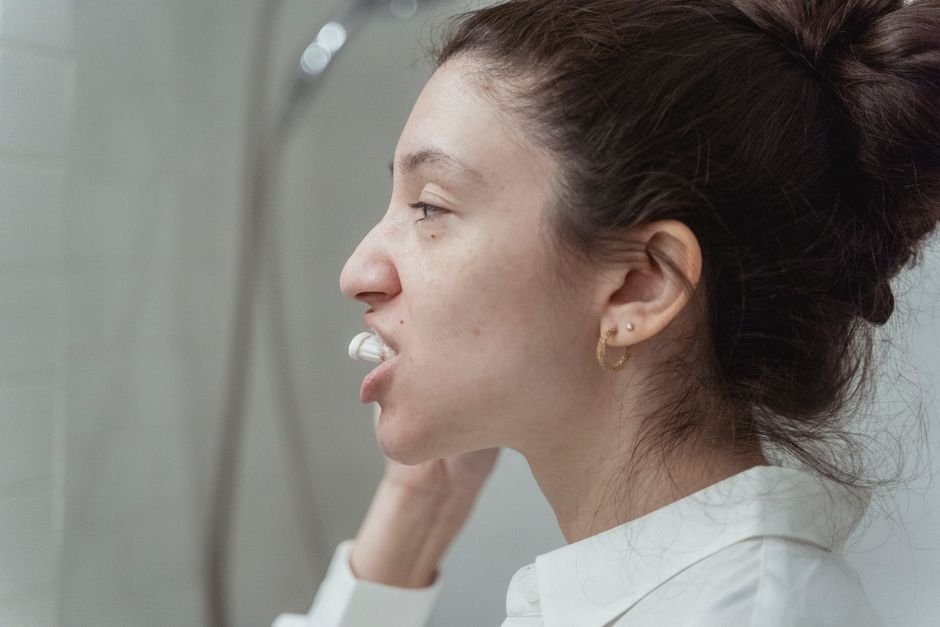
A gentle, controlled brushing technique protects enamel far better than pressing hard, despite the common assumption that harder scrubbing cleans more effectively. Using a soft-bristled brush with small circular motions, angled slightly towards the gum line, clears plaque and surface debris without wearing down the outer enamel layer. Two minutes, twice daily, covering every surface of every tooth, is generally considered sufficient for thorough cleaning.
Brushing too hard or using a firm-bristled brush can gradually wear away enamel, which paradoxically makes teeth look more yellow rather than brighter, since more of the dentin layer underneath becomes visible. It can also irritate the gums over time. Replacing a toothbrush every few months, once the bristles start to splay, helps maintain the gentle, effective cleaning action this habit depends on.
How Does Cutting Back on Tobacco Products Protect Tooth Colour?
Tobacco products, whether smoked or chewed, are one of the most significant contributors to stubborn tooth staining because the tar and other compounds they contain bond strongly to enamel and penetrate beyond the surface layer. This type of staining tends to be deeper and more resistant than the kind caused by food and drink, and it often develops a distinct yellow-brown tone that daily habits alone struggle to fully reverse.
Reducing or stopping tobacco use allows the natural colour of the teeth to gradually improve as new surface layers form without fresh staining compounds being added. This habit also benefits gum health and the mouth more broadly, since tobacco use is closely linked to a range of other oral health concerns. Any reduction supports both appearance and the underlying condition of the teeth and gums over time.
Are Natural Remedies Like Baking Soda Safe for Whitening Teeth at Home?
Baking soda has a mild abrasive quality that can help lift some surface staining when used occasionally, which is why it appears in a number of toothpaste formulations in carefully controlled amounts. Used sparingly and correctly, it is generally considered safe for most people as part of an established toothpaste product rather than as a standalone paste applied directly and frequently to the teeth.
Other popular home remedies, such as activated charcoal powders, are less well understood and can be more abrasive than they appear, carrying a real risk of gradually wearing down enamel with frequent use. Since enamel does not regenerate once it is lost, caution is worthwhile with any remedy that relies on scrubbing or abrasion. A standard fluoride toothpaste used correctly remains one of the safest daily choices for supporting both tooth strength and colour.
Frequently Asked Questions
Does drinking coffee always leave a permanent stain on teeth?
No, coffee staining is not permanent on its own. It builds up gradually on the outer enamel surface as a result of repeated exposure over time, and the rate at which it builds up can be slowed considerably by rinsing with water afterwards, staying hydrated and maintaining a consistent, gentle brushing routine.
How long does it take for these habits to show a visible difference?
Most people notice a gradual improvement over several weeks to a couple of months of consistent habits, since these changes work by slowing new staining and supporting the existing surface rather than by rapidly altering tooth colour. Consistency across many small habits matters more than any single change made in isolation.
Can whitening toothpaste alone make a noticeable difference?
Whitening toothpaste can help remove some surface staining through its mild abrasive and polishing ingredients, and many people notice a subtle improvement in surface brightness with regular use. It works on the outer layer only and tends to be most effective when combined with other habits such as rinsing after coloured foods and drinking plenty of water.
Is it true that oil pulling whitens teeth?
There is limited well-established evidence that oil pulling, which involves swishing oil in the mouth for several minutes, has a meaningful effect on tooth colour. Some people include it as part of a broader oral hygiene routine, but it should not replace brushing, cleaning between the teeth or the other everyday habits that have a clearer, more direct effect on surface staining.
Do electric toothbrushes remove more surface stains than manual ones?
Electric toothbrushes can be more effective at removing surface plaque and debris for many people, largely because their consistent motion makes it easier to clean thoroughly without pressing too hard. This more consistent cleaning action can help reduce the build-up of surface staining over time, particularly for anyone who finds it difficult to maintain a gentle, even technique by hand.