
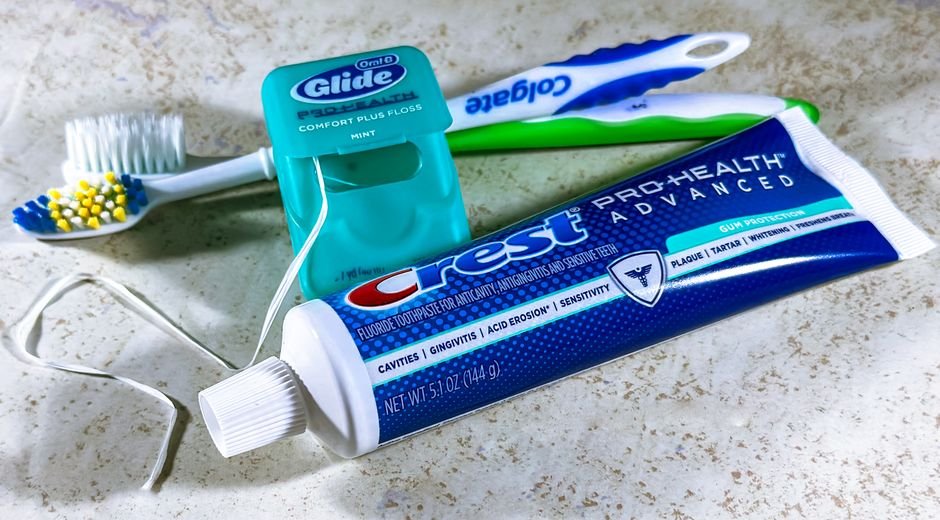
The best oral care routine isn’t the most elaborate one, it’s the one you’ll actually do every single day. Brushing twice for two minutes with a fluoride toothpaste, cleaning between your teeth once a day, and having your teeth checked regularly forms the realistic core that protects most people from decay and gum disease. Everything else, whether that’s a particular gadget, a fancy rinse, or a ten-step regimen copied from someone else’s bathroom shelf, is only useful if it fits around your actual life. A simple routine practised consistently will always outperform a perfect routine that gets abandoned after a fortnight.
Key takeaways
- Consistency matters far more than intensity, a modest routine done daily beats an ambitious one done occasionally.
- Brushing twice daily and cleaning between teeth once a day cover the essentials, everything else is optional.
- Anchoring oral care to existing habits, like a shower or breakfast, makes the routine easier to sustain.
- Busy periods and travel call for a scaled-back but non-negotiable minimum routine, not skipping altogether.
- Bleeding gums, persistent bad breath, or sensitivity are signs a routine needs adjusting, not just ignoring.
Why does consistency matter more than a “perfect” routine?
Plaque begins reforming on your teeth within hours of cleaning, which is exactly why dental professionals emphasise regularity over intensity. A routine performed reliably every morning and evening interrupts that cycle before it can cause harm, while an occasional deep-clean session, however thorough, leaves long gaps in between where bacteria can multiply undisturbed. This is the main reason simple habits tend to protect people better over the long run than complicated ones that are hard to keep up.
Chasing perfection often backfires. People who set the bar too high, buying every gadget and committing to lengthy routines, are more likely to feel overwhelmed and quietly give up within weeks. A realistic routine, one that matches your actual energy, time, and patience on an average day, is far more sustainable. Think of oral care less like a project to complete and more like a habit to maintain quietly in the background of daily life, similar to washing your hands or getting dressed.
What does a realistic morning routine look like?
A workable morning routine doesn’t need to be long, it needs to be reliable. Brushing for two minutes with a fluoride toothpaste, covering every surface of every tooth including the back molars and along the gumline, is the foundation. Many people find it easier to brush before breakfast, since this clears overnight bacterial build-up, though brushing after eating is also fine as long as you wait briefly if you’ve had something acidic like citrus fruit or juice, to avoid brushing softened enamel.
Beyond brushing, a quick rinse with water or a fluoride mouthwash can round things off, and if mornings are when you have more time than evenings, this is a sensible point in the day to clean between your teeth as well. The goal is to build a short sequence you can complete almost on autopilot: wet the brush, clean for two minutes, rinse, done. Keeping the steps few and the order consistent removes the mental effort of deciding what to do each day.
What does a realistic evening routine look like?
Evening cleaning arguably matters more than morning cleaning, because it removes the plaque and food debris that would otherwise sit undisturbed on your teeth for several hours of sleep, when saliva flow naturally decreases and its protective rinsing effect is reduced. A thorough two-minute brush before bed, ideally as the very last thing you do after any late snack or drink, gives your teeth the best chance of staying clean overnight.
This is also the most sensible time to clean between your teeth with floss or interdental brushes, since it only takes an extra minute and fits naturally at the end of a bathroom routine you’re already doing. If you use a fluoride mouthwash, using it at a different time from brushing, rather than immediately after, helps avoid rinsing away the concentrated fluoride left behind by your toothpaste. A calm, unhurried evening routine tends to stick better than one squeezed in at the last minute.
How can you adapt oral care around a busy schedule?
Busy periods are when routines are most likely to slip, so it helps to identify your genuine non-negotiables in advance rather than deciding on the fly. For most people that means two proper brushes a day, even if the cleaning between teeth or the mouthwash step gets shortened or skipped on the busiest days. Keeping a spare toothbrush and small toothpaste tube at work, in a bag, or in the car removes the excuse of “I wasn’t near a sink” when the day runs long.
It also helps to decouple oral care from a fixed clock time and instead attach it to an event, brushing after you get dressed rather than “at 7am”, for instance. Events happen even when schedules shift, whereas clock times get missed. On genuinely chaotic days, a few minutes of chewing sugar-free gum or rinsing with water after meals can serve as a stopgap, though it’s never a substitute for brushing and shouldn’t become the new normal.
What actually matters versus what’s optional?
Brushing twice daily with a fluoride toothpaste and cleaning between your teeth once a day are the two elements with the strongest, most consistent backing, they directly remove the plaque that causes decay and gum inflammation. Regular checkups with a dental professional matter too, since they catch problems early before they become painful or costly. These three form the non-negotiable backbone of oral care that almost everyone benefits from, regardless of lifestyle.
Mouthwash, tongue cleaning, electric versus manual brushes, and specialised toothpaste formulations sit in a more optional category. They can offer genuine extra benefit, freshening breath or targeting sensitivity, for example, but they’re additions rather than foundations. If time or motivation is limited, it makes sense to protect the core habits first and treat the extras as a bonus layer to add back in once the basics feel automatic, rather than the other way around.
How do you make the routine stick as a habit?
Habits form most reliably when they’re attached to something you already do without thinking, a concept sometimes called habit stacking. Placing your toothbrush next to items you already interact with each morning and evening, such as your skincare products or bedside light switch, creates a visual cue that prompts the next step automatically. Over a few weeks, the sequence stops requiring conscious decision-making and simply becomes part of how the day starts and ends.
Small friction reductions make a surprising difference too. Keeping supplies stocked so you never run out mid-week, choosing a toothpaste flavour you genuinely enjoy, and setting a visible timer if you tend to rush all lower the barrier to doing the routine properly. It’s also worth accepting that missing a step occasionally isn’t a failure worth dwelling on, what matters is getting back to the routine the next day rather than abandoning it out of frustration.
How should you adjust your routine while travelling?
Travel disrupts routines through unfamiliar bathrooms, altered schedules, and the simple risk of forgetting supplies, so a little preparation goes a long way. Packing a compact travel-sized brush, toothpaste, and interdental cleaner in your main bag, rather than only in checked luggage, ensures you can still clean your teeth even if plans change or you land somewhere unexpected. A reusable travel case also protects bristles from picking up germs in shared bathrooms or bags.
Time zones and irregular meals can make it tempting to skip a session, particularly on long journeys, but anchoring cleaning to waking up and going to sleep, rather than a specific hour, keeps the routine intact regardless of where you are. If drinking water is uncertain in a particular location, using bottled water to rinse is a sensible precaution. Otherwise, the same core habits that work at home translate perfectly well anywhere else.
What are the signs your current routine isn’t working?
Your mouth generally gives clear feedback when something in your routine needs adjusting. Gums that bleed when you brush or floss, persistent bad breath despite regular cleaning, new sensitivity to hot or cold, or a rough, filmy feeling on your teeth by the end of the day are all signals worth paying attention to rather than dismissing as normal. These changes often mean technique, frequency, or timing needs a closer look rather than indicating anything more serious on their own.
If these signs persist for more than a week or two despite consistent brushing and cleaning between teeth, it’s worth booking a checkup rather than experimenting further alone. A dental professional can identify whether the issue is technique-related, such as brushing too hard or missing certain areas, or whether it needs professional attention. Treating your mouth’s feedback as useful information, rather than something to ignore, is itself part of a routine that actually works.
Frequently Asked Questions
How long should brushing actually take?
Two minutes is the widely recommended duration, long enough to cover every surface of every tooth, including the back molars and along the gumline, without rushing. Many electric toothbrushes include a built-in timer for this reason, and a simple phone timer works just as well with a manual brush. Consistently brushing for less than a minute tends to leave plaque behind in hard-to-reach areas, even if the front teeth look clean.
Is mouthwash a necessary part of a daily routine?
Mouthwash is a helpful addition rather than an essential step. Brushing and cleaning between teeth remove the plaque responsible for most decay and gum problems, and a fluoride mouthwash can offer extra protection or freshen breath on top of that. If time is limited, it’s better to prioritise thorough brushing and interdental cleaning first and treat mouthwash as an optional extra rather than skipping the basics to fit it in.
Does it matter if I brush before or after breakfast?
Either approach is acceptable, and the right choice depends on personal preference. Brushing before breakfast clears overnight bacterial build-up and lets fluoride sit on your teeth before eating. Brushing after breakfast can leave your mouth feeling fresher for the day ahead, but it’s sensible to wait briefly, around half an hour, after acidic foods or drinks so you’re not brushing against softened enamel. Both routines protect your teeth as long as they’re consistent.
What’s the simplest way to remember to clean between my teeth?
Attaching it to a step you already do consistently works best, such as flossing immediately after your evening brush while you’re already standing at the sink. Keeping floss or interdental brushes visibly next to your toothbrush, rather than tucked in a drawer, also removes a small barrier that often causes people to skip the step. Trying it at whichever time of day you have a few unhurried minutes tends to work better than forcing it into a rushed moment.
Can I switch up my routine occasionally, or does it need to stay identical every day?
Small variation is completely fine, and expecting total rigidity can actually make a routine harder to sustain. What matters is that the core elements, brushing twice daily and cleaning between teeth once a day, happen consistently, not that every day looks identical. Swapping evening flossing to the morning occasionally, or using a different toothpaste flavour for variety, doesn’t undermine the routine as long as the essential habits keep happening.